
Updated: 16-03-2026
Added: 16-09-2025
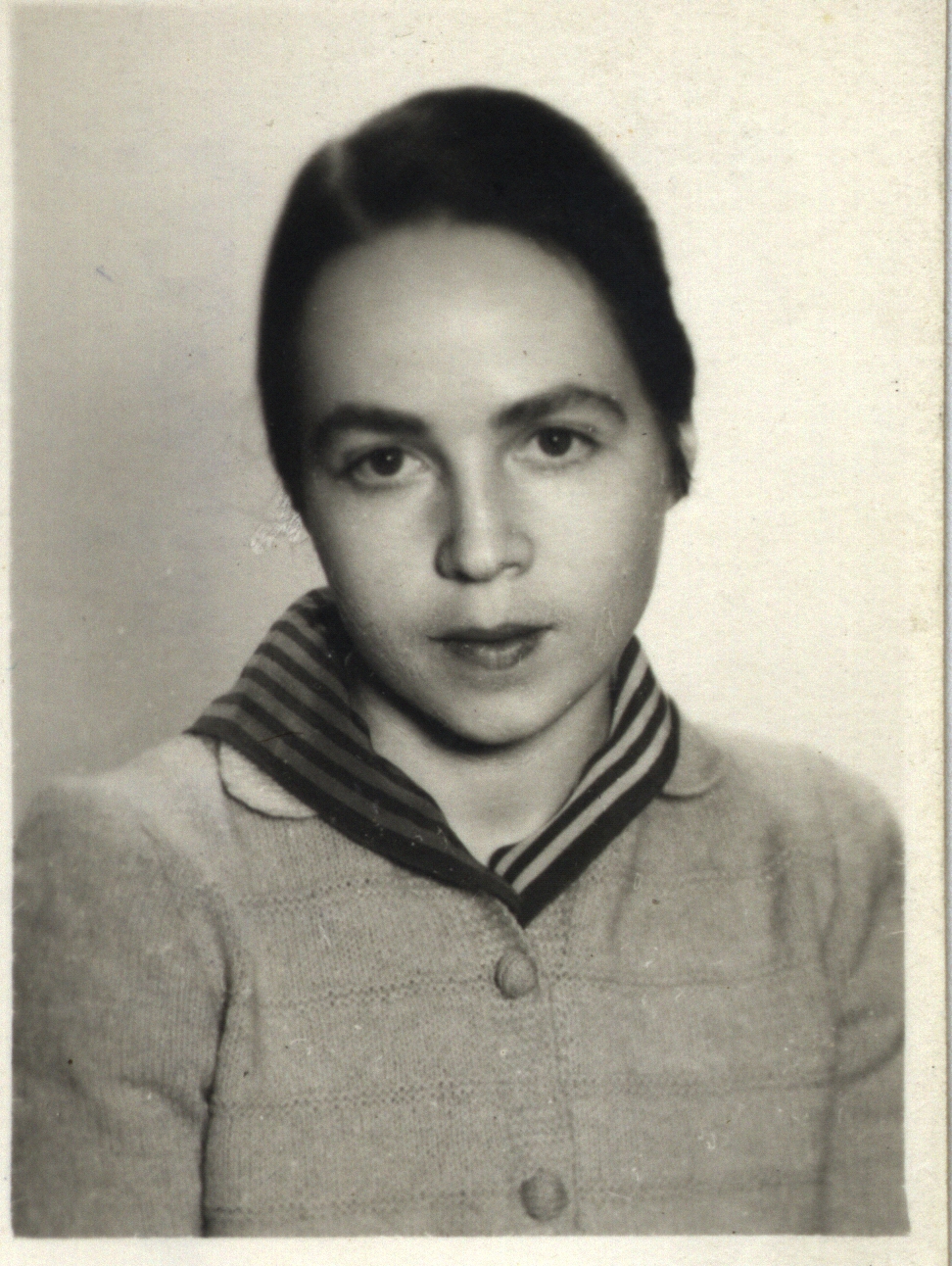
Danuta Dąbrowska was born on 12 January 1927 in Berlin. She was the daughter of Henryk and Idalia, née Jurzdycka. Her maiden name was Jakoba Fryda Bildsztejn. She changed it in 1942 when she and her mother were hiding on the so-called Aryan side, in Warsaw.
Her parents worked as doctors in Germany. She lived in Berlin until 1933, when she returned to Poland. The family settled in Sarnaki, in east-central Poland, where her mother ran a dental practice. The following year, after her parents divorced, she and her mother moved to Warsaw, where they lived in the Żoliborz district, in the First Colony of the Warsaw Housing Cooperative. Before the Second World War, she began her education at the Workers' Society of Friends of the Children's Gymnasium.
After the outbreak of the war, she and her mother were forced to move to the newly created ghetto. In 1940, they left Warsaw for nearby Falenica in the area, where they were imprisoned in the local ghetto until its liquidation. Using a false identity, she continued her education in clandestine classes organised by the Workers' Society of Friends of Children. During one of her trips outside the ghetto, she was recognised and captured by a blackmailer. After buying their freedom, she and her mother decided to return to Warsaw's Żoliborz district, where they lived under false names. After being found again by the blackmailers, Danuta was placed in the Sisters of the Heart of Mary convent in the Old Town, where she survived the Warsaw Uprising. Together with the sisters and the orphanage’s children, she was deported to Germany, where she did forced labour. She lived there until the end of the war.
After the war, she returned to Warsaw and began studying at the Warsaw School of Economics, and then at the University of Warsaw. While still a student, she worked at the Main Institute of Industrial Chemistry library, where she was responsible for collecting and cataloguing the library's collections. In June 1951, she began working at the Jewish Historical Institute in Warsaw as a translator-proofreader and then as an archivist. She became a member of the editorial board of the Bulletin of the Jewish Historical Institute and began her academic research.
Her first works focused on the liquidation of regional ghettos in the Wartheland region. Her subsequent research dealt with the history of the Łódź Ghetto, including its organisation and Jewish administration. She then became involved in the preparation of a scholarly edition of The Chronicle of the Łódź Ghetto, together with historian Lucjan Dobroszycki. The two researchers managed to publish only the first two volumes. Work on subsequent volumes was suspended as a result of the events of March 1968. As the political situation worsened, Dąbrowska decided to leave for Israel.
There, she started work at Yad Vashem, where she combined her translation skills with her historical expertise. She was part of a team that compiled a volume of an encyclopaedia of Jewish communities in the Łódź area. As well, she worked on translations of different texts, including Polish-Jewish Relations by Emanuel Ringelblum and the memoirs of Noach Lasman.
In 2013, she appeared in the documentary film Ocaleni (The Survivors), directed by Joanna Król and Karolina Dzięciołowska.
She died in the Tel Aviv suburb of Givatayim on 17 April 2015
Her parents worked as doctors in Germany. She lived in Berlin until 1933, when she returned to Poland. The family settled in Sarnaki, in east-central Poland, where her mother ran a dental practice. The following year, after her parents divorced, she and her mother moved to Warsaw, where they lived in the Żoliborz district, in the First Colony of the Warsaw Housing Cooperative. Before the Second World War, she began her education at the Workers' Society of Friends of the Children's Gymnasium.
After the outbreak of the war, she and her mother were forced to move to the newly created ghetto. In 1940, they left Warsaw for nearby Falenica in the area, where they were imprisoned in the local ghetto until its liquidation. Using a false identity, she continued her education in clandestine classes organised by the Workers' Society of Friends of Children. During one of her trips outside the ghetto, she was recognised and captured by a blackmailer. After buying their freedom, she and her mother decided to return to Warsaw's Żoliborz district, where they lived under false names. After being found again by the blackmailers, Danuta was placed in the Sisters of the Heart of Mary convent in the Old Town, where she survived the Warsaw Uprising. Together with the sisters and the orphanage’s children, she was deported to Germany, where she did forced labour. She lived there until the end of the war.
After the war, she returned to Warsaw and began studying at the Warsaw School of Economics, and then at the University of Warsaw. While still a student, she worked at the Main Institute of Industrial Chemistry library, where she was responsible for collecting and cataloguing the library's collections. In June 1951, she began working at the Jewish Historical Institute in Warsaw as a translator-proofreader and then as an archivist. She became a member of the editorial board of the Bulletin of the Jewish Historical Institute and began her academic research.
Her first works focused on the liquidation of regional ghettos in the Wartheland region. Her subsequent research dealt with the history of the Łódź Ghetto, including its organisation and Jewish administration. She then became involved in the preparation of a scholarly edition of The Chronicle of the Łódź Ghetto, together with historian Lucjan Dobroszycki. The two researchers managed to publish only the first two volumes. Work on subsequent volumes was suspended as a result of the events of March 1968. As the political situation worsened, Dąbrowska decided to leave for Israel.
There, she started work at Yad Vashem, where she combined her translation skills with her historical expertise. She was part of a team that compiled a volume of an encyclopaedia of Jewish communities in the Łódź area. As well, she worked on translations of different texts, including Polish-Jewish Relations by Emanuel Ringelblum and the memoirs of Noach Lasman.
In 2013, she appeared in the documentary film Ocaleni (The Survivors), directed by Joanna Król and Karolina Dzięciołowska.
She died in the Tel Aviv suburb of Givatayim on 17 April 2015
Resources
AIPN, 0423/9390, 1268/20326, t. 2; AUW, Akta studenta Dąbrowska Danuta; AŻIH, Akta personalne, t. 6: Dąbrowska Danuta.
D. Dąbrowska, Administracja żydowska w Łodzi i jej agendy w okresie od początku okupacji do zamknięcia getta (8 IX 1939 – 30 IV 1940), „Biuletyn ŻIH” 1963, nr 1/2 (45/46); eadem, Zagłada skupisk żydowskich w „Kraju Warty” w okresie okupacji hitlerowskiej, „Biuletyn ŻIH” 1955, nr 1/2 (13/14);eadem, O projektach poprawy sytuacji ludności w getcie łódzkim (wnioski mieszkańców getta z lat 1940–1942), „Biuletyn ŻIH” 1961, nr 2 (38); eadem, Struktura i funkcje administracji żydowskiej getta łódzkiego (maj–grudzień 1940 r.), cz. 1, „Biuletyn ŻIH” 1964, nr 3 (51); eadem, Struktura i funkcje administracji żydowskiej w getcie łódzkim (maj–grudzień 1940 r.), cz. 2, „Biuletyn ŻIH” 1964, nr 4 (52); eadem, Wsiedleni Żydzi zachodnioeuropejscy w getcie łódzkim, „Biuletyn ŻIH” 1968, nr 1/2 (65/66); Kronika getta łódzkiego, t. 1:Styczeń 1941 – maj 1942, z oryg. do druku przygotowali, wstępem i przypisami zaopatrzyli D. Dąbrowska, L. Dobroszycki, Łódź: Wydawnictwo Łódzkie, 1965; Kronika getta łódzkiego, t. 2: Czerwiec – grudzień 1942, z oryg. do druku przygotowali, wstępem i przypisami zaopatrzyli D. Dąbrowska, L. Dobroszycki, Łódź: Wydawnictwo Łódzkie, 1966; Pinkas ha-kehilot Polin. Enciklopedia szel ha-jiszuwim ha-Jehudim le-min hiwasdam wead le-ahar Szoat milchemet ha-olam ha szenija, red. D. Dabrowska, A. Wein, autorzy: P. Egoldberg, D. Dabrowska, A. Wein Jakubowicz, A. Weiss, Jerusalem: Yad Vashem, 1976; Soviet and East European Jewry as Reflected in Western Periodicals: an annotated bibliography, wybór D. Dombrovska, oprac. B. Pinkus, Jerusalem: Hebrew University, Center for Documentation of East European Jewry, Society for Research on Jewish Communities, 1972; „Szpera” – fragment oficjalnej kroniki getta, „Głos Robotniczy” 1963, nr 248; „Szpera” – fragment oficjalnej kroniki getta, „Głos Robotniczy” 1963, nr 254.
J. Walicki, Polityka historyczna a nauka. Dzieje badań materiałów archiwalnych getta łódzkiego i jego Kroniki do roku 1968, [w:] Kronika, t. 5.
D. Dąbrowska, Administracja żydowska w Łodzi i jej agendy w okresie od początku okupacji do zamknięcia getta (8 IX 1939 – 30 IV 1940), „Biuletyn ŻIH” 1963, nr 1/2 (45/46); eadem, Zagłada skupisk żydowskich w „Kraju Warty” w okresie okupacji hitlerowskiej, „Biuletyn ŻIH” 1955, nr 1/2 (13/14);eadem, O projektach poprawy sytuacji ludności w getcie łódzkim (wnioski mieszkańców getta z lat 1940–1942), „Biuletyn ŻIH” 1961, nr 2 (38); eadem, Struktura i funkcje administracji żydowskiej getta łódzkiego (maj–grudzień 1940 r.), cz. 1, „Biuletyn ŻIH” 1964, nr 3 (51); eadem, Struktura i funkcje administracji żydowskiej w getcie łódzkim (maj–grudzień 1940 r.), cz. 2, „Biuletyn ŻIH” 1964, nr 4 (52); eadem, Wsiedleni Żydzi zachodnioeuropejscy w getcie łódzkim, „Biuletyn ŻIH” 1968, nr 1/2 (65/66); Kronika getta łódzkiego, t. 1:Styczeń 1941 – maj 1942, z oryg. do druku przygotowali, wstępem i przypisami zaopatrzyli D. Dąbrowska, L. Dobroszycki, Łódź: Wydawnictwo Łódzkie, 1965; Kronika getta łódzkiego, t. 2: Czerwiec – grudzień 1942, z oryg. do druku przygotowali, wstępem i przypisami zaopatrzyli D. Dąbrowska, L. Dobroszycki, Łódź: Wydawnictwo Łódzkie, 1966; Pinkas ha-kehilot Polin. Enciklopedia szel ha-jiszuwim ha-Jehudim le-min hiwasdam wead le-ahar Szoat milchemet ha-olam ha szenija, red. D. Dabrowska, A. Wein, autorzy: P. Egoldberg, D. Dabrowska, A. Wein Jakubowicz, A. Weiss, Jerusalem: Yad Vashem, 1976; Soviet and East European Jewry as Reflected in Western Periodicals: an annotated bibliography, wybór D. Dombrovska, oprac. B. Pinkus, Jerusalem: Hebrew University, Center for Documentation of East European Jewry, Society for Research on Jewish Communities, 1972; „Szpera” – fragment oficjalnej kroniki getta, „Głos Robotniczy” 1963, nr 248; „Szpera” – fragment oficjalnej kroniki getta, „Głos Robotniczy” 1963, nr 254.
J. Walicki, Polityka historyczna a nauka. Dzieje badań materiałów archiwalnych getta łódzkiego i jego Kroniki do roku 1968, [w:] Kronika, t. 5.