
Updated: 16-03-2026
Added: 24-09-2025
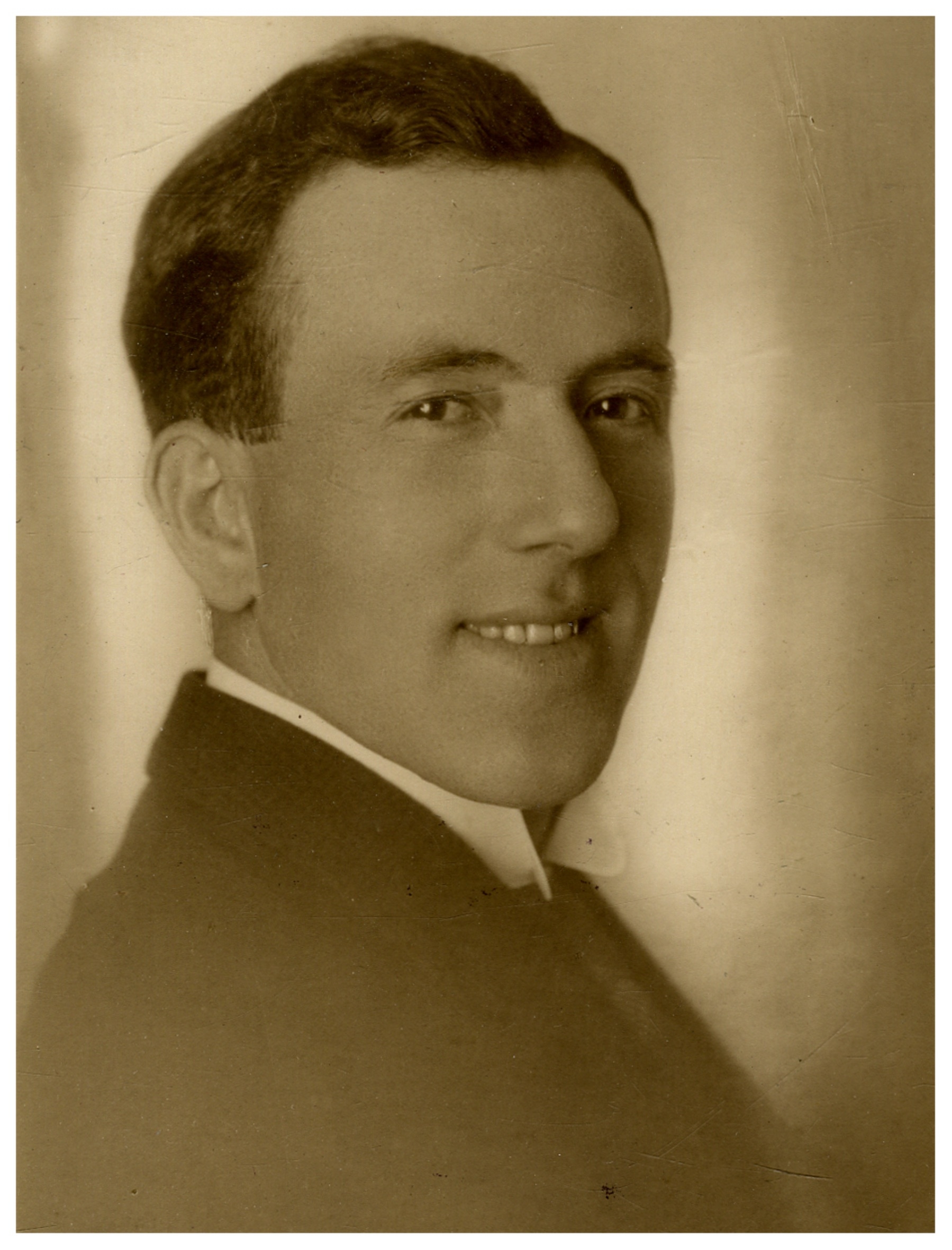
Josef Brumlík was born on 20 August 1895 in the village of Struhařov, in the Benešov district, in central Bohemia, in what is today the Czech Republic. He was the eldest of four siblings (Rudolf, born 24 January 1897; Marie, born 6 August 1898; and Arnošt, born 13 April 1903). His parents, Karel (born 20 May 1868) and Albína (born 19 June 1870) Brumlík, were butchers and owned a pub called The Czech Lion in the village as well as a small field.The family, who spoke Czech, were secular and well integrated in Czech society.
At the time, the village was in the Austro-Hungarian Empire. Josef served in the army in World War I between March 1915 and December 1918 in Begrade, Serbia, and in Sokal, in what is now western Ukraine. As the prosperous early years of newly independent Czechoslovakia unfolded, he moved to the capital, Prague (vide), with his brother Rudolf in 1924 and worked there as a butcher, gaining municipal residency in 1935. Their brother Arnošt followed them to Prague in 1926, as did their parents in 1927, after an arson attack on their house by unknown assailants. All the Brumlíks adapted well in Prague and soon had their own butcher shops.
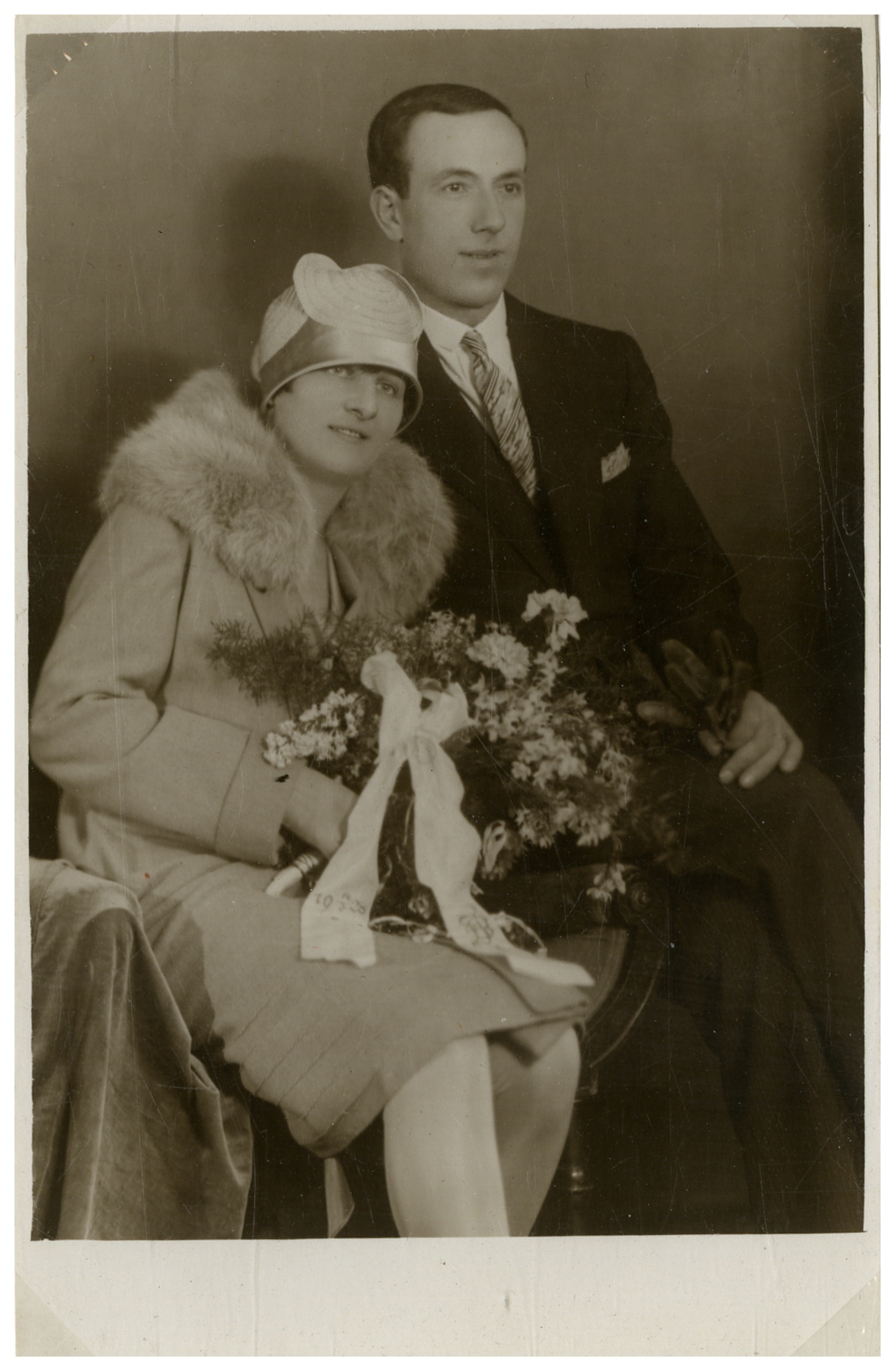
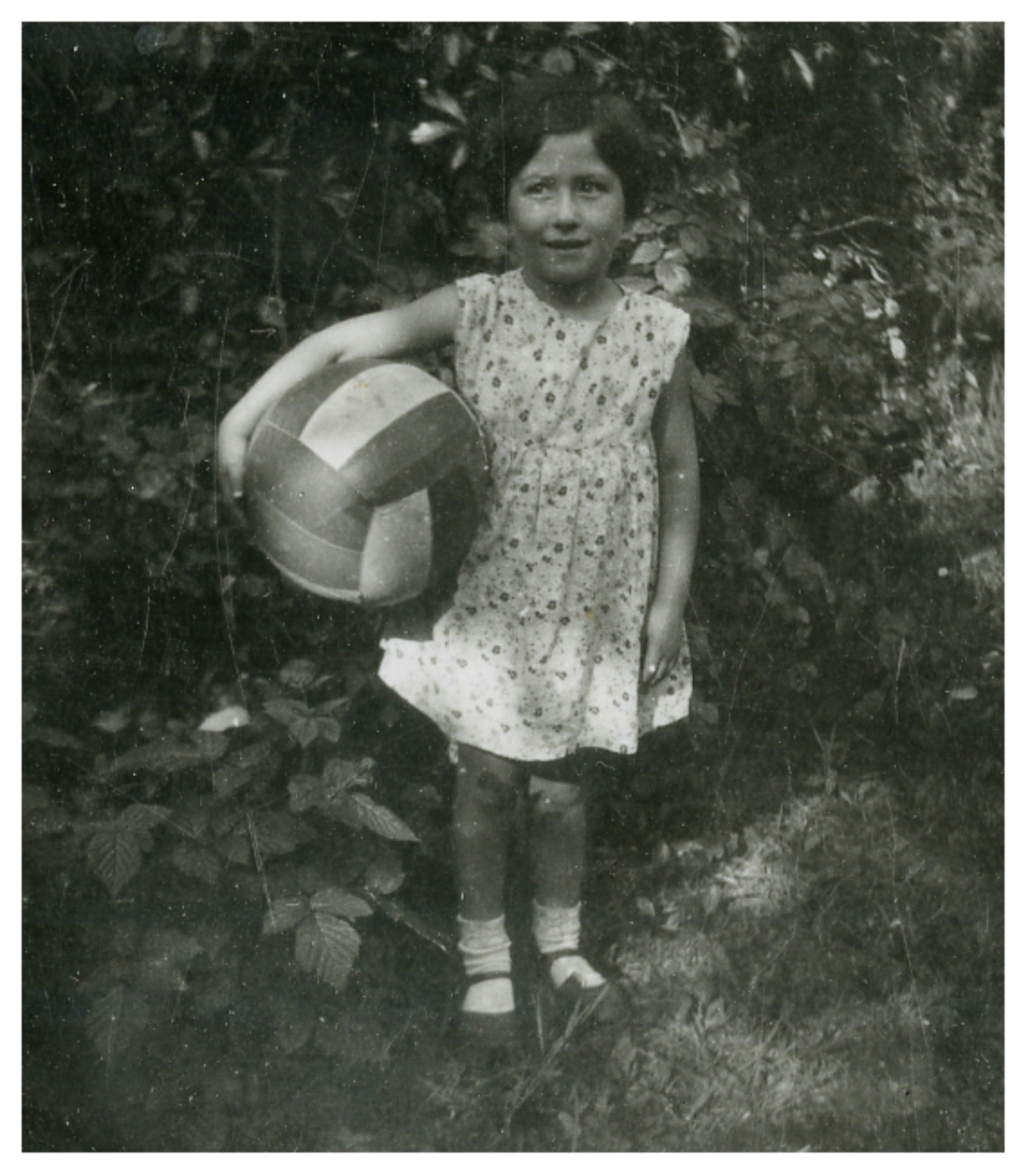
By 1929, the whole family, including Marie, were in Prague. In Struhařov, Marie had married a schoolteacher, František Johanis, and, in 1929, he took on a teaching position in Prague. Josef married Anna (née Kreisslová, born 12 September 1903) on 14 February 1928 and their daughter Eva was born on 23 May 1929. Josef was also the loving uncle of his nephew Luboš, Marie‘s son, who always remembered his uncle as an exceptionally kind, generous, active, and enteprising man. They were a close extended family. Photos exist of family trips to a spa in Moravia and a mountain resort in Slovakia.
In March 1939, with the start of the Nazi occupation of Czechoslovakia, the persecution of Jews began. Josef and Anna applied for passports and wanted to emigrate, but it was too late. Unlike his parents and his brother Arnošt, who remained single and lived with his parents, Josef and his family did not have to move from the home they rented in Prague until they were forced to take part in the E transport from Prague to the Łódź Ghetto on 3 November 1941. They arrived in Łódź the following day. Official lists show that the family, along with others from the transport, was first housed in a so-called “kolektyw“ (vide) – a collective – at Jakuba 10 Street.
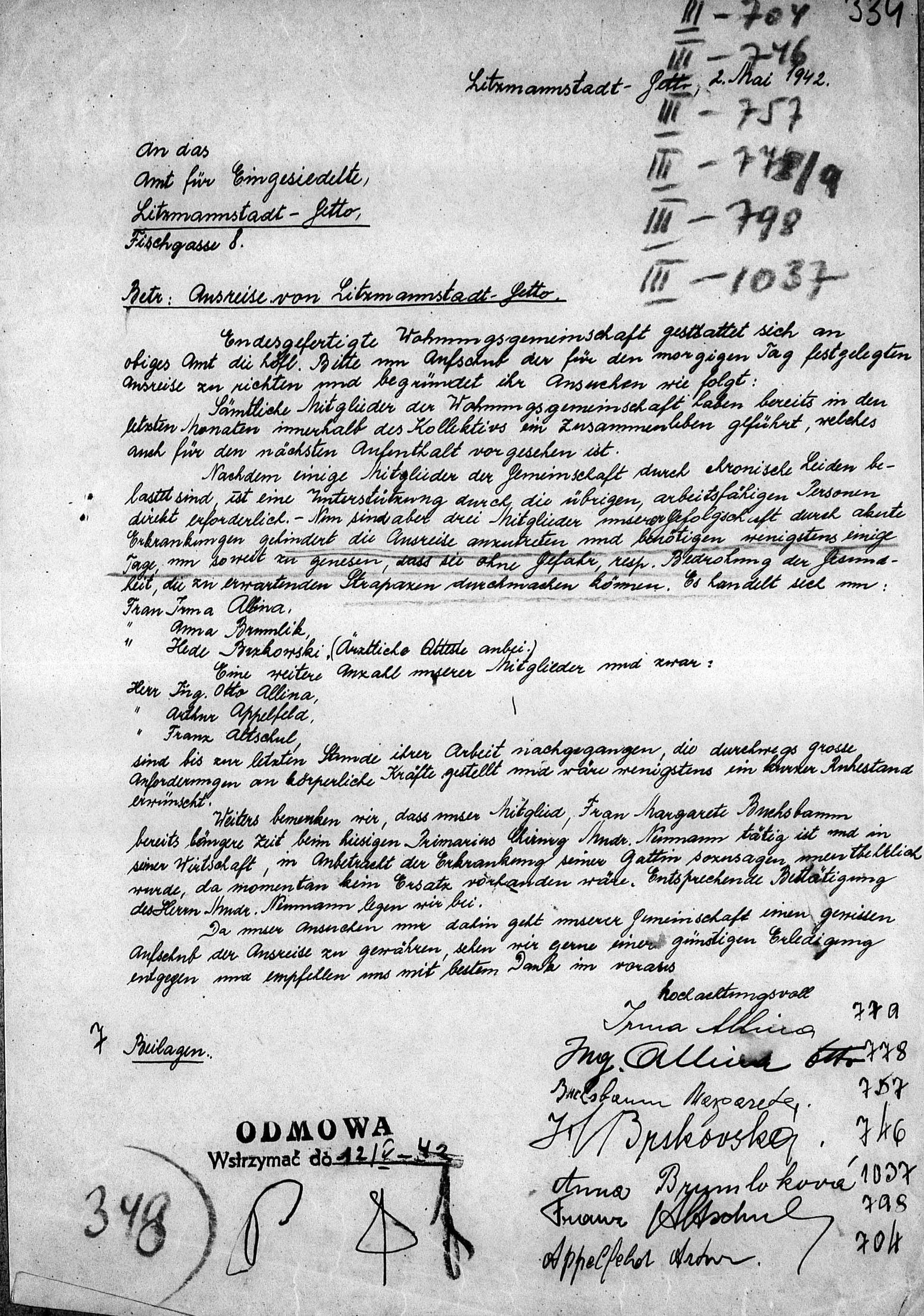
Half of the Czech ghetto Jews died that winter, which was particularly harsh. Researchers know that Anna and Eva survived the winter, because a letter dated 2 May 1942 asked the Łódź Ghetto resettlement commitee for a temporary exemption from a planned deportation the next day. Anna Brumlíková’s name was one of the seven signatures on the letter. The reason for seeking the exemption, according to the letter, was that Anna was “acutely ill.“ The request was denied. According to The Chronicle of the Łódź Ghetto (vide) , on May 3 the people were to gather at the Central Prison (vide). They were deported to Chełmno (vide) the following day. Anna and Eva were on the transport list, and it appears they died on that same day.
It is not known what happened to Josef. There are no records of his death. He may have died in Łódź. His name is not in the cemetery registry records, but these documents are not complete. He may have been deported to a death camp during the final days of the Łódź Ghetto, when lists of deportees were no longer being made.
Marie and Rudolf survived. They had non-Jewish spouses, and, thus, were spared the worst of the Nazi terror. Their children were not deported because they were designated as being a “mixed-race,“ or “mischling,“ by the Nazis, and were registered as Christians at birth. The grandparents, Karel and Albína, were deported to the Theresienstadt Ghetto, in Terezín, near Prague, on 24 October 1942. Despite their age, they survived and were liberated in Terezín on 8 May 1945. Karel died soon after. Arnošt was also deported to Terezín, on 13 July 1942, and, from there, sent to Auschwitz (vide) on 6 September 1943. He probably died the night of 8-9 May 1944, along with nearly 4,000 other Czechs from thattransport.
In 2025, Stolpersteine memorial stones were placed in Prague at Kladenská 3, where Josef, Anna, and Eva lived before their deportation, and at Ovenecká 17, where Karel, Albína, and Arnošt lived and operated their butcher shop.
At the time, the village was in the Austro-Hungarian Empire. Josef served in the army in World War I between March 1915 and December 1918 in Begrade, Serbia, and in Sokal, in what is now western Ukraine. As the prosperous early years of newly independent Czechoslovakia unfolded, he moved to the capital, Prague (vide), with his brother Rudolf in 1924 and worked there as a butcher, gaining municipal residency in 1935. Their brother Arnošt followed them to Prague in 1926, as did their parents in 1927, after an arson attack on their house by unknown assailants. All the Brumlíks adapted well in Prague and soon had their own butcher shops.
By 1929, the whole family, including Marie, were in Prague. In Struhařov, Marie had married a schoolteacher, František Johanis, and, in 1929, he took on a teaching position in Prague. Josef married Anna (née Kreisslová, born 12 September 1903) on 14 February 1928 and their daughter Eva was born on 23 May 1929. Josef was also the loving uncle of his nephew Luboš, Marie‘s son, who always remembered his uncle as an exceptionally kind, generous, active, and enteprising man. They were a close extended family. Photos exist of family trips to a spa in Moravia and a mountain resort in Slovakia.
In March 1939, with the start of the Nazi occupation of Czechoslovakia, the persecution of Jews began. Josef and Anna applied for passports and wanted to emigrate, but it was too late. Unlike his parents and his brother Arnošt, who remained single and lived with his parents, Josef and his family did not have to move from the home they rented in Prague until they were forced to take part in the E transport from Prague to the Łódź Ghetto on 3 November 1941. They arrived in Łódź the following day. Official lists show that the family, along with others from the transport, was first housed in a so-called “kolektyw“ (vide) – a collective – at Jakuba 10 Street.
Half of the Czech ghetto Jews died that winter, which was particularly harsh. Researchers know that Anna and Eva survived the winter, because a letter dated 2 May 1942 asked the Łódź Ghetto resettlement commitee for a temporary exemption from a planned deportation the next day. Anna Brumlíková’s name was one of the seven signatures on the letter. The reason for seeking the exemption, according to the letter, was that Anna was “acutely ill.“ The request was denied. According to The Chronicle of the Łódź Ghetto (vide) , on May 3 the people were to gather at the Central Prison (vide). They were deported to Chełmno (vide) the following day. Anna and Eva were on the transport list, and it appears they died on that same day.
It is not known what happened to Josef. There are no records of his death. He may have died in Łódź. His name is not in the cemetery registry records, but these documents are not complete. He may have been deported to a death camp during the final days of the Łódź Ghetto, when lists of deportees were no longer being made.
Marie and Rudolf survived. They had non-Jewish spouses, and, thus, were spared the worst of the Nazi terror. Their children were not deported because they were designated as being a “mixed-race,“ or “mischling,“ by the Nazis, and were registered as Christians at birth. The grandparents, Karel and Albína, were deported to the Theresienstadt Ghetto, in Terezín, near Prague, on 24 October 1942. Despite their age, they survived and were liberated in Terezín on 8 May 1945. Karel died soon after. Arnošt was also deported to Terezín, on 13 July 1942, and, from there, sent to Auschwitz (vide) on 6 September 1943. He probably died the night of 8-9 May 1944, along with nearly 4,000 other Czechs from thattransport.
In 2025, Stolpersteine memorial stones were placed in Prague at Kladenská 3, where Josef, Anna, and Eva lived before their deportation, and at Ovenecká 17, where Karel, Albína, and Arnošt lived and operated their butcher shop.
Nadia Johanisova
Resources
Kronika obce Struhařova, a historical chronicle of the village of Struhařov, unpaginated, introductory entry from1924 and entry from 24 October 1927, available from the author;
National Archive Prague, Prague police records, 1921-1945.
National Archive Prague, Prague police records, 1921-1945.
References
Jewish Museum in Prague database:
Josef Brumlík: https://pinkas.jewishmuseum.cz/cs/vyhledavani/detail?victim_id=50077
Anna Brumlíková: https://pinkas.jewishmuseum.cz/cs/vyhledavani/detail?victim_id=50043
Eva Brumlíková: https://pinkas.jewishmuseum.cz/cs/vyhledavani/detail?victim_id=50041
Arnošt Brumlík: https://pinkas.jewishmuseum.cz/cs/vyhledavani/detail?victim_id=50066
Terezín Memorial database:
Karel Brumlík: https://www.pamatnik-terezin.cz/vezen/te-brumlik-karel
Albína Brumlíková: https://www.pamatnik-terezin.cz/vezen/te-brumlikova-albina
Josef Brumlík: https://pinkas.jewishmuseum.cz/cs/vyhledavani/detail?victim_id=50077
Anna Brumlíková: https://pinkas.jewishmuseum.cz/cs/vyhledavani/detail?victim_id=50043
Eva Brumlíková: https://pinkas.jewishmuseum.cz/cs/vyhledavani/detail?victim_id=50041
Arnošt Brumlík: https://pinkas.jewishmuseum.cz/cs/vyhledavani/detail?victim_id=50066
Terezín Memorial database:
Karel Brumlík: https://www.pamatnik-terezin.cz/vezen/te-brumlik-karel
Albína Brumlíková: https://www.pamatnik-terezin.cz/vezen/te-brumlikova-albina