
Updated: 04-10-2026
Added: 16-09-2025
Beginning on 15 June 1942, Irene Hauser (vide) kept a diary in the Łódź Ghetto. It is the only known ghetto diary written by an adult woman and the only one by a person deported from Vienna.
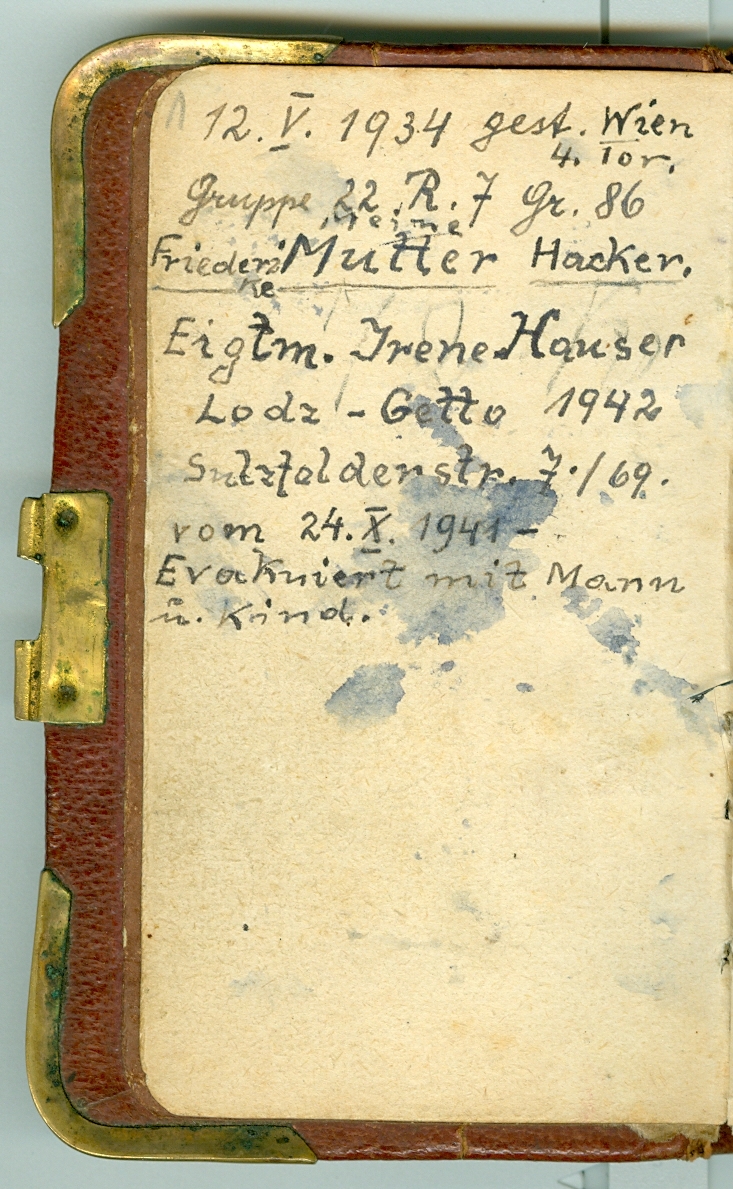
The first entry expresses her wish that the notebook be given to her sister in England. The text begins with a list of immediate family members and probably friends, along with addresses, sometimes occupations. The regular diary entries are preceded by a retrospective listing of Irene's most relevant information concerning her arrival in the ghetto, subsequent accommodation, food rations and the employment of her husband Leopold (who was born in 1898 and died in Vienna after the war).
The diary is also extremely valuable material for the study of everyday life in the ghetto, especially among Jewish people deported from the Reich and the Protectorate. The longing for her family and the painful absence of any news about them (vide The Postal Ban) emanates through Irene's writing. Irene could not have known that most of her family by this time had been deported from Vienna to ghettos and camps, and, in most cases, killed.
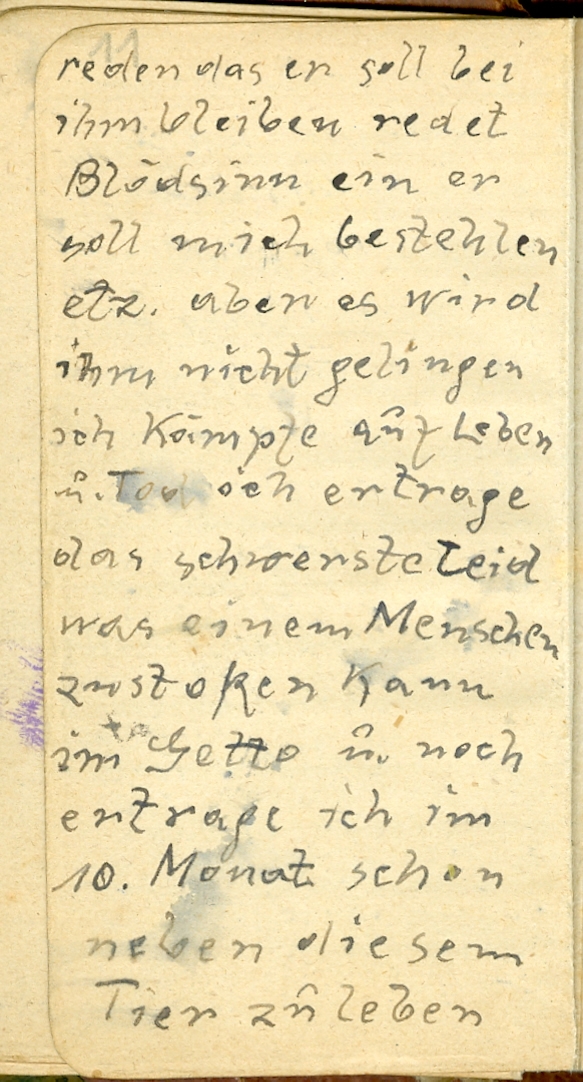
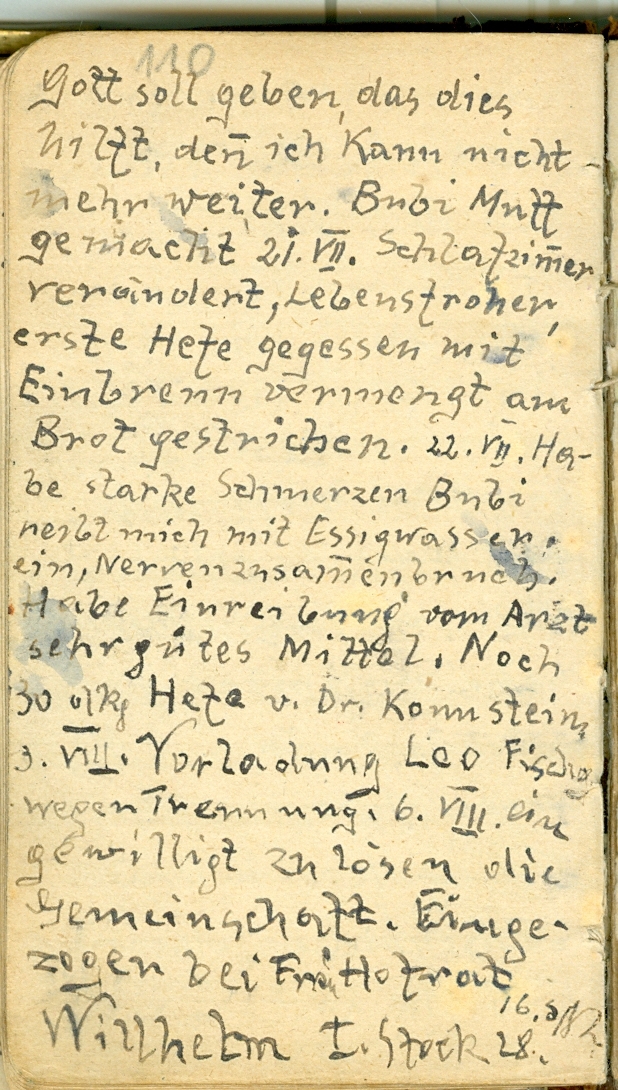
The diary contains intimate details of her life, including the deteriorating relationship with her husband. Hunger and the inability to obtain food were the sources of her greatest problems, most notably the sight of her malnourished son Erich, affectionately known as Bobi (born in 1936). Out of desperation, Irene sold off her clothes; she even broke a gold crown from a tooth, which enabled her to buy half a kilo of potatoes. The diary illuminates relationships with neighbours, most of whom, like her, were deported to the ghetto in the autumn of 1941. They tried to help support Irene by providing her with domestic work to earn some extra money to buy food.
The last entry in the diary is dated 8 September 1942. During the Szpera (vide), Irene and six-year-old Bobi were deported to Chełmno (vide), where they were killed.
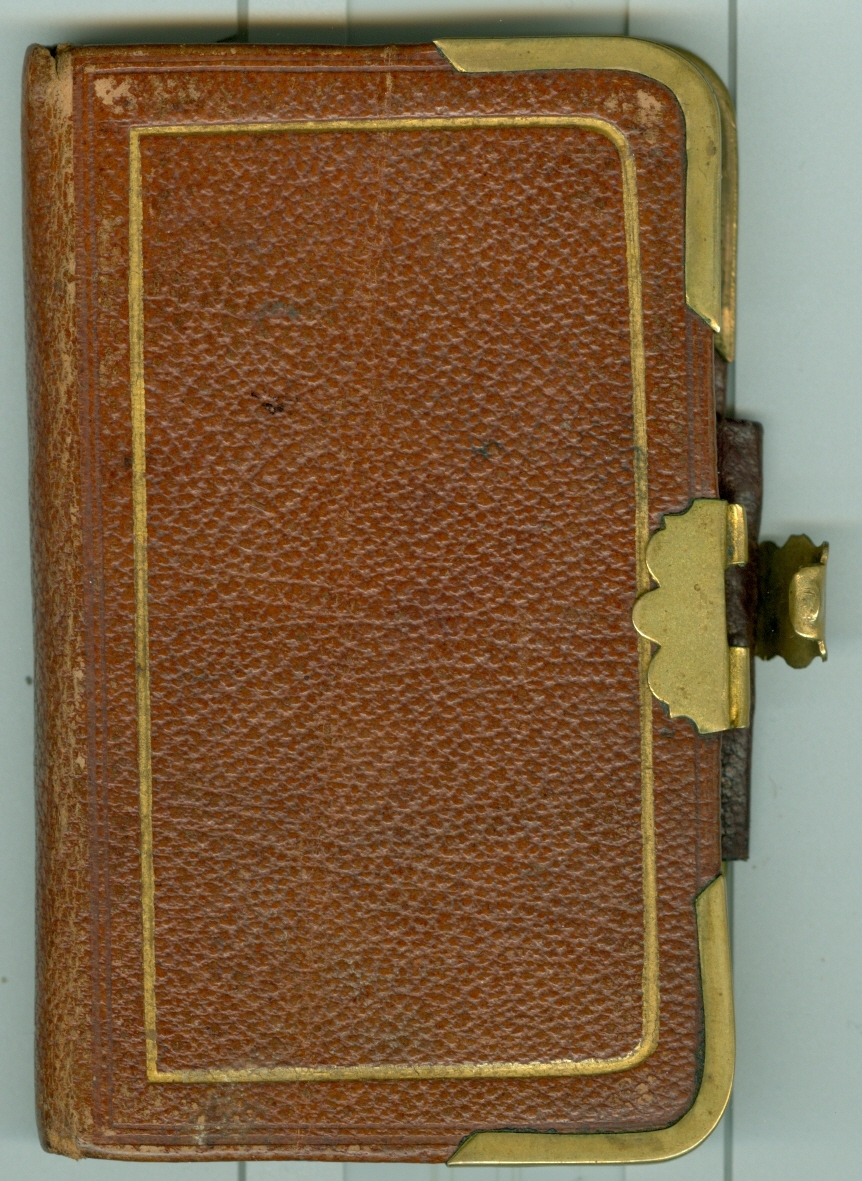
Irena wrote in German, often using sentence phrases or abbreviations. She jotted down notes in black ink in a 60 × 98 millimetre notebook in leather binding with brass fittings and a buckle. There are 111 pages of written text; 19 notebook pages were left blank. The dated entries do not always appear in chronological order. Perhaps Irene jotted them down on impulse, in a random place in her notebook. Sometimes an entry began on the right-hand page and continued on the left-hand page. Most of the notes, nevertheless, are from left to right.
The diary was probably hidden in the ghetto. After the war it was found and was kept in private hands. In 1991, Arnold Mostowicz (vide) obtained the diary and gave it to the Jewish Historical Institute in Warsaw (ref. 302/299).
Ewa Wiatr
The first entry expresses her wish that the notebook be given to her sister in England. The text begins with a list of immediate family members and probably friends, along with addresses, sometimes occupations. The regular diary entries are preceded by a retrospective listing of Irene's most relevant information concerning her arrival in the ghetto, subsequent accommodation, food rations and the employment of her husband Leopold (who was born in 1898 and died in Vienna after the war).
The diary is also extremely valuable material for the study of everyday life in the ghetto, especially among Jewish people deported from the Reich and the Protectorate. The longing for her family and the painful absence of any news about them (vide The Postal Ban) emanates through Irene's writing. Irene could not have known that most of her family by this time had been deported from Vienna to ghettos and camps, and, in most cases, killed.
The diary contains intimate details of her life, including the deteriorating relationship with her husband. Hunger and the inability to obtain food were the sources of her greatest problems, most notably the sight of her malnourished son Erich, affectionately known as Bobi (born in 1936). Out of desperation, Irene sold off her clothes; she even broke a gold crown from a tooth, which enabled her to buy half a kilo of potatoes. The diary illuminates relationships with neighbours, most of whom, like her, were deported to the ghetto in the autumn of 1941. They tried to help support Irene by providing her with domestic work to earn some extra money to buy food.
The last entry in the diary is dated 8 September 1942. During the Szpera (vide), Irene and six-year-old Bobi were deported to Chełmno (vide), where they were killed.
Irena wrote in German, often using sentence phrases or abbreviations. She jotted down notes in black ink in a 60 × 98 millimetre notebook in leather binding with brass fittings and a buckle. There are 111 pages of written text; 19 notebook pages were left blank. The dated entries do not always appear in chronological order. Perhaps Irene jotted them down on impulse, in a random place in her notebook. Sometimes an entry began on the right-hand page and continued on the left-hand page. Most of the notes, nevertheless, are from left to right.
The diary was probably hidden in the ghetto. After the war it was found and was kept in private hands. In 1991, Arnold Mostowicz (vide) obtained the diary and gave it to the Jewish Historical Institute in Warsaw (ref. 302/299).
Ewa Wiatr