
See on a map
Updated: 04-10-2026
Added: 09-04-2025
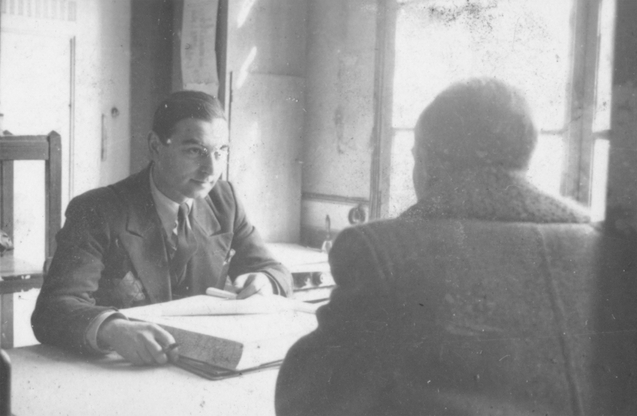
german. Um- Abteilung für die Eingesiedelten. Department for the Outsettled, which was established in the occasion of the resettlement (see below) of Jews from Włocławek and the surrounding area and the arrival of about 20,000 Jews deported from the Old Reich, Vienna, Prague and Luxembourg.
Jews from Włocławek and the surrounding area were given accommodation in camps, schools and private homes – mostly in Marysin. Housing Department was in charge of that operation. In the parlance of the Housing Department, the term “umzidlung” was used, meaning moving from one place to another, as well as accommodation of the resettled. “Umzidlung” meant not just wandering from one country or city to another, but also the transfer from one street to another and from one apartment to another. On 4 November 1941, the last transport from abroad arrived. Within a month (from 26 September until 4 November) 23,000 Jews arrived. Some of them were accommodated in private homes, and others went to camps called “collectives” (vide Kolektywy). To relieve the suffering of the resettled and to remedy this new problem as quickly as possible, the Eldest of the Jews formed a new department and appointed attorney Henryk Neftalin, the then head of the Housing Department, as its head. The Department for the Outsettled, located in a one-story brick building at 8 Rybna St., was established on 3 Decemeber 1941, one month after the arrival of the last transport. Ghetto inhabitants learned about it from special posters stating:
“Regulation No. 342 concerning the Department for the Outsettled.
In order to allow the settlement of various matters relating to those arrived in the ghetto, I have established a new department, named “Department for the Outsettled.” Attorney Henryk Neftalin has been nominated as the director. The office is located at 8 Rybna St. The opening hours are the same as in the case of other Departments.
The Department will be responsible for all matters concerning the resettled from Włocławek and the surrounding area and the Old Reich. Anyone interested can already obtain information and receive help in the Department. Other offices and departments can handle matters related to the resettled only after consultation with the Department for the Outsettled. All regulations issued by the aforementioned institution must be immediately implemented.
M. Ch. Rumkowski
Eldest of the Jews in Litzmannstadt Litzmannstadt-Getto,
3 December 1941”.
The tasks of the Department for the Outsettled were of extreme importance. U These were: to provide accommodation, supply of linens, clothes, household items,
bunks, to organize medical care, to keep records, and to respond to thousands
requests coming from abroad from relatives of the outsettled. The Department also
controlled food rations for people in the collectives. The Chairman administered the sum of 898,241.80 Mk deposited by these collectives. The collectives were formed from the following transports: Prague (all five transports), Berlin (second transport), Berlin 3, Düsseldorf, Cologne 2, and Frankfurt. At the beginning, the outsettled found support and comfort in the collective life after the shock they suffered leaving their homes in Europe; later, however, such community spirit weakened and people were looking for ways to find accommodation on their own. They found apartments and one by one they got accustomed to the ghetto life and its rhythm determined by work. Those who did not find any work, could not feed themselves. In February 1942, after the change of the leadership of the Department (Neftalin was replaced by engineer Minc, Binem Kaplan and Izydor Patałowski) an idea appeared to feed thousands of the outsettled by offering them a loan (see below). Soon, the credit system was implemented. The outsettled received products, paying for them later with money they earned or received from outside the ghetto. The credit system was one of the most important achievements in the field of provisioning the resettled Polish and foreign Jews.
UM (short for Umzidlung) was an institution that was meant to alleviate the suffering of the resettled, taking care of all issues concerning them. Those that came to the ghetto could count on help in every case. There were special Home for the Elderly (vide Altersheim), where hundreds of sick and infirm were sent and provided with proper care. In May 1942, “UM" suffered a great blow when foreign Jews were deported. Also in the homes for the elderly, the May deportations put an end to the useful and humanitarian work of “UM.”
Since then, the activity of the Department has been gradually limited. Today (May 1944), as we write these words, “UM” occupies a small room at 25 Łagiewnicka St.
The number of persons using the loan does not exceed 200. Help that the resettled
receive is minimal and very limited.
Jews from Włocławek and the surrounding area were given accommodation in camps, schools and private homes – mostly in Marysin. Housing Department was in charge of that operation. In the parlance of the Housing Department, the term “umzidlung” was used, meaning moving from one place to another, as well as accommodation of the resettled. “Umzidlung” meant not just wandering from one country or city to another, but also the transfer from one street to another and from one apartment to another. On 4 November 1941, the last transport from abroad arrived. Within a month (from 26 September until 4 November) 23,000 Jews arrived. Some of them were accommodated in private homes, and others went to camps called “collectives” (vide Kolektywy). To relieve the suffering of the resettled and to remedy this new problem as quickly as possible, the Eldest of the Jews formed a new department and appointed attorney Henryk Neftalin, the then head of the Housing Department, as its head. The Department for the Outsettled, located in a one-story brick building at 8 Rybna St., was established on 3 Decemeber 1941, one month after the arrival of the last transport. Ghetto inhabitants learned about it from special posters stating:
“Regulation No. 342 concerning the Department for the Outsettled.
In order to allow the settlement of various matters relating to those arrived in the ghetto, I have established a new department, named “Department for the Outsettled.” Attorney Henryk Neftalin has been nominated as the director. The office is located at 8 Rybna St. The opening hours are the same as in the case of other Departments.
The Department will be responsible for all matters concerning the resettled from Włocławek and the surrounding area and the Old Reich. Anyone interested can already obtain information and receive help in the Department. Other offices and departments can handle matters related to the resettled only after consultation with the Department for the Outsettled. All regulations issued by the aforementioned institution must be immediately implemented.
M. Ch. Rumkowski
Eldest of the Jews in Litzmannstadt Litzmannstadt-Getto,
3 December 1941”.
The tasks of the Department for the Outsettled were of extreme importance. U These were: to provide accommodation, supply of linens, clothes, household items,
bunks, to organize medical care, to keep records, and to respond to thousands
requests coming from abroad from relatives of the outsettled. The Department also
controlled food rations for people in the collectives. The Chairman administered the sum of 898,241.80 Mk deposited by these collectives. The collectives were formed from the following transports: Prague (all five transports), Berlin (second transport), Berlin 3, Düsseldorf, Cologne 2, and Frankfurt. At the beginning, the outsettled found support and comfort in the collective life after the shock they suffered leaving their homes in Europe; later, however, such community spirit weakened and people were looking for ways to find accommodation on their own. They found apartments and one by one they got accustomed to the ghetto life and its rhythm determined by work. Those who did not find any work, could not feed themselves. In February 1942, after the change of the leadership of the Department (Neftalin was replaced by engineer Minc, Binem Kaplan and Izydor Patałowski) an idea appeared to feed thousands of the outsettled by offering them a loan (see below). Soon, the credit system was implemented. The outsettled received products, paying for them later with money they earned or received from outside the ghetto. The credit system was one of the most important achievements in the field of provisioning the resettled Polish and foreign Jews.
UM (short for Umzidlung) was an institution that was meant to alleviate the suffering of the resettled, taking care of all issues concerning them. Those that came to the ghetto could count on help in every case. There were special Home for the Elderly (vide Altersheim), where hundreds of sick and infirm were sent and provided with proper care. In May 1942, “UM" suffered a great blow when foreign Jews were deported. Also in the homes for the elderly, the May deportations put an end to the useful and humanitarian work of “UM.”
Since then, the activity of the Department has been gradually limited. Today (May 1944), as we write these words, “UM” occupies a small room at 25 Łagiewnicka St.
The number of persons using the loan does not exceed 200. Help that the resettled
receive is minimal and very limited.
I.Sz.