
See on a map
Updated: 30-07-2026
Added: 07-07-2023
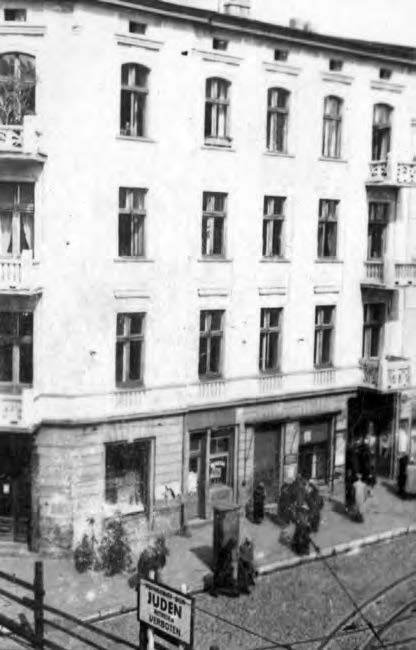
On the order of the Head of the Council of Elders, M. Ch. Rumkowski and lawyer Henryk Neftalin established the Archive on November 17, 1940, as a subdepartment of the Census Department. The Chairman wanted the department to quietly receive material for the future portrayal of (the history of) the ghetto and to keep records itself as well. Jewish writer Józef Zelkowicz was appointed as the archivist. The Head of the Archive was Dr. Józef Klementynowski. Additional staff included Engineer Bernard Ostrowski and Julian Cukier-Cerski. The latter assumed responsibility for The Daily Chronicle. As far as was feasible, the Archive collected all records concerning the ghetto and its staff wrote articles and reports on various institutions, departments, and manufacturing facilities. Also, Szmul Rozensztajn, the future editor of the ghetto newspaper and subsequent head of the printery, temporarily worked in the Archive. The Archive’s secretary was Ms. Jaszuńska, who later became a secretary at the Groceries and Bread Department.
After the resettlements from the Old Reich and Bohemia and Moravia in 1942, two successive partners began working for the Archive, namely Dr. Bernhard Heilig, economic journalist, and Dr. Oskar Singer, recently editor-in-chief of the Jewish News Gazette in Prague. In June 1942, Dr. Oskar Rosenfeld of Vienna also appeared.
After the dissolution of the School Department, the Chairman appointed Dr. Kamieniecki to the Archive, a scholar who had been a school inspector. In March 1943, as Dr. J. Klementynowski had been put in charge of the newly established Credit Bank, Dr. Oskar Singer was appointed his successor as head of the Archive. In 1943, there were major changes among the collaborators at the Archive as the following died of tuberculosis: Cukier-Cerski (d. April 6, 1943), Dr. Kamieniecki (d. June 21, 1943), and Dr. Heilig (d. June 28, 1943).
Beginning in early 1944, the Archive undertook the project of the encyclopaedia of the ghetto. The lack of proper staff hampered the entire project.
There was also the so-called Censorship Committee at the Archive, consisting of lawyer Neftalin as chief of the committee, head of the Archive at the time Dr. Kamieniecki, as well as head of the School Department Mosze Karo.
All material supplied by archivists was subject to a thorough check before being included in the archive. As such, the name 'Archive' does not mean a quiet, scholarly study where the collected documents were painstakingly compiled. The above-mentioned archivists’ deaths – including Hecht, an official – point to harsh environmental working conditions. Hunger and cold almost completely prevented regular, creative work.
They lacked appropriate external collaborators. The Archive's activity had to be kept secret from the outer circle, so there was a lack of information from the inhabitants of the ghetto. The main difficulty, which prevented proper networking, was the fact that nothing could be learned from the management office of the Head of the Council of the Elders. Obtaining important materials from them proved to be impossible. The Eldest himself was extremely reserved and uncommunicative about any political issues, always giving a stereotypical reply: “It’s not time to write about it.” Also, his first secretary, Ms. Dora Fuchs, was extremely reserved about disclosing information, which was understandable under the circumstances. The only way for the Archivists to find out about any events and incidents was through personal experience, mostly without any insight into their cause or background. The Daily Chronicle, run initially quite ascetically by Cukier-Cerski and later a bit more vibrantly by Dr. Oskar Singer, provides an interesting perspective on life in the ghetto. Novellas, poems, reports, articles, various collective works (the Rumkowski's speeches, etc.) and the archives of some departments together form a noteworthy source of material for future objective assessment of the unique community.
After the resettlements from the Old Reich and Bohemia and Moravia in 1942, two successive partners began working for the Archive, namely Dr. Bernhard Heilig, economic journalist, and Dr. Oskar Singer, recently editor-in-chief of the Jewish News Gazette in Prague. In June 1942, Dr. Oskar Rosenfeld of Vienna also appeared.
After the dissolution of the School Department, the Chairman appointed Dr. Kamieniecki to the Archive, a scholar who had been a school inspector. In March 1943, as Dr. J. Klementynowski had been put in charge of the newly established Credit Bank, Dr. Oskar Singer was appointed his successor as head of the Archive. In 1943, there were major changes among the collaborators at the Archive as the following died of tuberculosis: Cukier-Cerski (d. April 6, 1943), Dr. Kamieniecki (d. June 21, 1943), and Dr. Heilig (d. June 28, 1943).
Beginning in early 1944, the Archive undertook the project of the encyclopaedia of the ghetto. The lack of proper staff hampered the entire project.
There was also the so-called Censorship Committee at the Archive, consisting of lawyer Neftalin as chief of the committee, head of the Archive at the time Dr. Kamieniecki, as well as head of the School Department Mosze Karo.
All material supplied by archivists was subject to a thorough check before being included in the archive. As such, the name 'Archive' does not mean a quiet, scholarly study where the collected documents were painstakingly compiled. The above-mentioned archivists’ deaths – including Hecht, an official – point to harsh environmental working conditions. Hunger and cold almost completely prevented regular, creative work.
They lacked appropriate external collaborators. The Archive's activity had to be kept secret from the outer circle, so there was a lack of information from the inhabitants of the ghetto. The main difficulty, which prevented proper networking, was the fact that nothing could be learned from the management office of the Head of the Council of the Elders. Obtaining important materials from them proved to be impossible. The Eldest himself was extremely reserved and uncommunicative about any political issues, always giving a stereotypical reply: “It’s not time to write about it.” Also, his first secretary, Ms. Dora Fuchs, was extremely reserved about disclosing information, which was understandable under the circumstances. The only way for the Archivists to find out about any events and incidents was through personal experience, mostly without any insight into their cause or background. The Daily Chronicle, run initially quite ascetically by Cukier-Cerski and later a bit more vibrantly by Dr. Oskar Singer, provides an interesting perspective on life in the ghetto. Novellas, poems, reports, articles, various collective works (the Rumkowski's speeches, etc.) and the archives of some departments together form a noteworthy source of material for future objective assessment of the unique community.
Oskar Singer